Fee Download Happiness Hypothesis: Finding Modern Truth in Ancient Wisdom...Why the Meaningful Life is Closer Than You Think, by Jonathan Haidt
This is why we recommend you to consistently see this resource when you require such book Happiness Hypothesis: Finding Modern Truth In Ancient Wisdom...Why The Meaningful Life Is Closer Than You Think, By Jonathan Haidt, every book. By online, you could not getting guide shop in your city. By this online library, you could find guide that you actually intend to read after for long time. This Happiness Hypothesis: Finding Modern Truth In Ancient Wisdom...Why The Meaningful Life Is Closer Than You Think, By Jonathan Haidt, as one of the advised readings, tends to remain in soft documents, as all of book collections here. So, you could additionally not wait for few days later on to get as well as read the book Happiness Hypothesis: Finding Modern Truth In Ancient Wisdom...Why The Meaningful Life Is Closer Than You Think, By Jonathan Haidt.
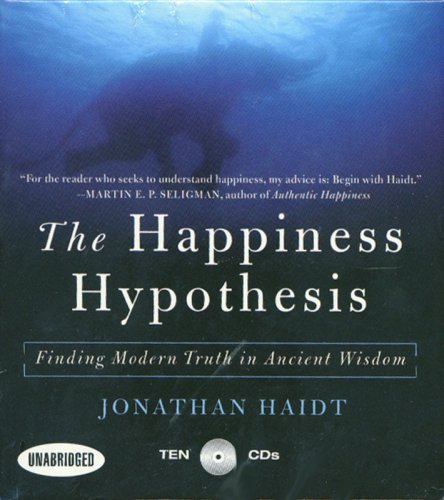
Happiness Hypothesis: Finding Modern Truth in Ancient Wisdom...Why the Meaningful Life is Closer Than You Think, by Jonathan Haidt

Fee Download Happiness Hypothesis: Finding Modern Truth in Ancient Wisdom...Why the Meaningful Life is Closer Than You Think, by Jonathan Haidt
Happiness Hypothesis: Finding Modern Truth In Ancient Wisdom...Why The Meaningful Life Is Closer Than You Think, By Jonathan Haidt. A job could obligate you to constantly enrich the knowledge and also encounter. When you have no adequate time to boost it directly, you could obtain the experience and also understanding from reviewing guide. As everybody knows, book Happiness Hypothesis: Finding Modern Truth In Ancient Wisdom...Why The Meaningful Life Is Closer Than You Think, By Jonathan Haidt is incredibly popular as the home window to open the globe. It implies that reading book Happiness Hypothesis: Finding Modern Truth In Ancient Wisdom...Why The Meaningful Life Is Closer Than You Think, By Jonathan Haidt will certainly provide you a brand-new method to locate every little thing that you require. As guide that we will certainly offer below, Happiness Hypothesis: Finding Modern Truth In Ancient Wisdom...Why The Meaningful Life Is Closer Than You Think, By Jonathan Haidt
As known, journey and also encounter regarding session, home entertainment, as well as knowledge can be gotten by only reading a book Happiness Hypothesis: Finding Modern Truth In Ancient Wisdom...Why The Meaningful Life Is Closer Than You Think, By Jonathan Haidt Even it is not directly done, you could know even more about this life, about the globe. We offer you this appropriate and also simple method to get those all. We provide Happiness Hypothesis: Finding Modern Truth In Ancient Wisdom...Why The Meaningful Life Is Closer Than You Think, By Jonathan Haidt and also many book collections from fictions to science at all. One of them is this Happiness Hypothesis: Finding Modern Truth In Ancient Wisdom...Why The Meaningful Life Is Closer Than You Think, By Jonathan Haidt that can be your companion.
Exactly what should you assume more? Time to get this Happiness Hypothesis: Finding Modern Truth In Ancient Wisdom...Why The Meaningful Life Is Closer Than You Think, By Jonathan Haidt It is simple then. You can just rest and remain in your place to obtain this publication Happiness Hypothesis: Finding Modern Truth In Ancient Wisdom...Why The Meaningful Life Is Closer Than You Think, By Jonathan Haidt Why? It is online book establishment that provide a lot of collections of the referred books. So, merely with web link, you could take pleasure in downloading this publication Happiness Hypothesis: Finding Modern Truth In Ancient Wisdom...Why The Meaningful Life Is Closer Than You Think, By Jonathan Haidt and also numbers of publications that are looked for now. By visiting the web link page download that we have actually given, the book Happiness Hypothesis: Finding Modern Truth In Ancient Wisdom...Why The Meaningful Life Is Closer Than You Think, By Jonathan Haidt that you refer a lot can be found. Just save the requested book downloaded and install and then you could enjoy guide to review whenever and also place you desire.
It is very easy to review guide Happiness Hypothesis: Finding Modern Truth In Ancient Wisdom...Why The Meaningful Life Is Closer Than You Think, By Jonathan Haidt in soft documents in your gadget or computer. Again, why should be so hard to get guide Happiness Hypothesis: Finding Modern Truth In Ancient Wisdom...Why The Meaningful Life Is Closer Than You Think, By Jonathan Haidt if you can pick the easier one? This site will alleviate you to choose and decide on the most effective cumulative books from the most ideal seller to the launched publication lately. It will certainly constantly upgrade the collections time to time. So, attach to internet and also visit this site consistently to obtain the new publication each day. Now, this Happiness Hypothesis: Finding Modern Truth In Ancient Wisdom...Why The Meaningful Life Is Closer Than You Think, By Jonathan Haidt is yours.
This is a book about ten great ideas.Each chapter is an attempt to savor one idea that has been discovered by several of the world's civilizations - to question it scientifically, and to extract from it the lessons that apply to our modern lives.Jonathan Haidt skillfully combines two genres#151;philosophical wisdom and scientific research#151;delighting the reader with surprising insights. He explains, for example, why we have such difficulty controlling ourselves and sticking to our plans; why no achievement brings lasting happiness, yet a few changes in your life can have profound effects, and why even confirmed atheists experience spiritual elevation. In a stunning final chapter, Haidt addresses the grand question "How can I live a meaningful life?," offering an original answer that draws on the rich inspiration of both philosophy and science.
- Sales Rank: #1914801 in Books
- Published on: 2007-07-23
- Formats: Audiobook, CD, Unabridged
- Original language: English
- Number of items: 10
- Dimensions: 6.00" h x 1.25" w x 5.25" l, .55 pounds
- Running time: 660 minutes
- Binding: Audio CD
From Publishers Weekly
Starred Review. The spirit is willing but the flesh is weak, lamented St. Paul, and this engrossing scientific interpretation of traditional lore backs him up with hard data. Citing Plato, Buddha and modern brain science, psychologist Haidt notes the mind is like an "elephant" of automatic desires and impulses atop which conscious intention is an ineffectual "rider." Haidt sifts Eastern and Western religious and philosophical traditions for other nuggets of wisdom to substantiate—and sometimes critique—with the findings of neurology and cognitive psychology. The Buddhist-Stoic injunction to cast off worldly attachments in pursuit of happiness, for example, is backed up by Mihaly Csikszentmihalyi's studies into pleasure. And Nietzsche's contention that what doesn't kill us makes us stronger is considered against research into post-traumatic growth. An exponent of the "positive psychology" movement, Haidt also offers practical advice on finding happiness and meaning. Riches don't matter much, he observes, but close relationships, quiet surroundings and short commutes help a lot, while meditation, cognitive psychotherapy and Prozac are equally valid remedies for constitutional unhappiness. Haidt sometimes seems reductionist, but his is an erudite, fluently written, stimulating reassessment of age-old issues. (Jan.)
Copyright � Reed Business Information, a division of Reed Elsevier Inc. All rights reserved.
From Booklist
Using the wisdom culled from the world's greatest civilizations as a foundation, social psychologist Haidt comes to terms with 10 Great Ideas, viewing them through a contemporary filter to learn which of their lessons may still apply to modern lives. He first discusses how the mind works and then examines the Golden Rule ("Reciprocity is the most important tool for getting along with people"). Next, he addresses the issue of happiness itself--where does it come from?--before exploring the conditions that allow growth and development. He also dares to answer the question that haunts most everyone--What is the meaning of life?--by again drawing on ancient ideas and incorporating recent research findings. He concludes with the question of meaning: Why do some find it? Balancing ancient wisdom and modern science, Haidt consults great minds of the past, from Buddha to Lao Tzu and from Plato to Freud, as well as some not-so-greats: even Dr. Phil is mentioned. Fascinating stuff, accessibly expressed. June Sawyers
Copyright � American Library Association. All rights reserved
Review
"Riveting... Brilliantly synthesising ancient cultural insights with modern psychology and even holding out some faint hope that your happiness, if not your tallness, might be marginally adjustable after all." Sunday Times "Marvellous... Haidt...takes us on an extraordinary journey... I don't think I've ever read a book that laid out the contemporary understanding of the human condition with such simple clarity and sense." -- James Flint Guardian "A superbly argued, crystal clear and intelligent blend of new directions in contemporary experimental psychology with traditional philosophical thought... And you know what? Reading it did actually make this reviewer happier." Arena "A delightful book... By some margin the most intellectually substantial book to arise from the 'Positive Psychology' movement." Nature "With singular gusto, Haidt measures ten 'Great Ideas' against past/present research in psychology and science. "LJ" 's verdict: Dr. Phil et al. don't have diddly on the old-school sages. No man is an island, indeed, and no modern reader should be without this carefully considered demystification of life" Library Journal Best Books 2006
Most helpful customer reviews
13 of 13 people found the following review helpful.
I truly loved the book.
By Brian Johnson
[[VIDEOID:9422f9c9cd9a77a3954a14d807c67011]] “Where does happiness come from? There are several different “happiness hypotheses.” One is that happiness comes from getting what you want, but we all know (and research confirms) that such happiness is short-lived. A more promising hypothesis is that happiness comes from within and cannot be obtained by making the world conform to your desires. This idea was widespread in the ancient world: Buddha in India and the Stoic philosophers in ancient Greece and Rome all counseled people to break their emotional attachments to people and events, which are always unpredictable and uncontrollable, and to cultivate instead an attitude of acceptance. This ancient idea deserves respect, and it is certainly true that changing your mind is usually a more effective response to frustration than is changing the world. However, I will present evidence that this second version of the happiness hypothesis is wrong. Recent research shows that there are some things worth striving for; there are some external conditions of life that can make you lastingly happier. One of these conditions is relatedness—the bonds we form, and need to form, with others. I’ll present research showing where love comes from, why passionate love always cools, and what kind of love is “true” love. I’ll suggest that the happiness hypothesis offered by Buddha and the Stoics should be amended: Happiness comes from within, and happiness comes from without. We need the guidance of both ancient wisdom and modern science to get the balance right.”
~ Jonathan Haidt from The Happiness Hypothesis
That’s officially the longest intro quote of any of the Notes I’ve created so far but OMG. Makes you wanna read the whole book, eh?! :)
Jonathan Haidt is a leading positive psychology researcher/professor at the University of Virginia and this book is an incredible look at ten “Great Ideas” from ancient wisdom that he brilliantly analyzes in the light of modern science while helping us apply the super practical stuff to our 21st century lives. It’s a great blend of intellectual rigor, philosophical wisdom and nuts and-bolts practicality that I highly recommend.
If this Note resonates with you, I *definitely* think you’ll love the book. I put it up there with Sonja Lyubomirsky’s How of Happiness and Tal Ben-Shahar’s Pursuit of Perfect and Happier as some must-read positive psychology goodness.
Here are some of the Big Ideas:
1. The Rider & The Elephant - Learn to ride your elephant!
2. Epiphanies - And lasting change.
3. Meditation - The magic pill.
4. Cognitive Therapy - It works.
5. Pulling the Splinter - The joy of taking responsibility.
Let’s get clear on our ultimate purpose and move toward it, lest we step in other people’s elephant poop, yo! :)
More goodness— including PhilosophersNotes on 300+ books in our *OPTIMIZE* membership program. Find out more at brianjohnson . me.
289 of 294 people found the following review helpful.
An Enjoyable Read!
By Dan Wallace
I saw Chris Anderson (Wired Editor and TED co-founder) asked by Charlie Rose to name his favorite book of the last few years. "The Happiness Hypothesis" was the immediate response. Now this book is one of my favorites, too. The Happiness Hypothesis compares traditional philisohpical traditions with the lastest scientific discoveries, and the two ends meet well in the center. The author's own experiences provide narrative glue.
A major finding is that happiness is a set point for us, and that after good times and bad, we tend to return to our general level of happiness. At the same time, we can do things that help or hurt our happiness, and we can understand better how our minds and emotions work.
Factors that decrease happiness include persistent noise, lack of control, shame, dysfunctional relationships, and long commutes. Strong marriages, physical touch, meaningful relationships and religious affiliation tend to improve happiness. Activities with others enhance our happiness; status objects tend to separate us from others.
In terms of parenting, Haidt finds that secure children are well supported by parents who are nearby, providing safety and security. Avoidant children are neglected by their parents. And resistant children have parents who alternate between support and neglect. Haidt also shows how moral relativism is not good for children.
I was also fascinated by Haidt's observation that modernity and commercial culture slowly replaced the ideal of character with the idea personality, leading to a focus on individual preferences and personal fulfillment. This movement reached a height during the "values clarification" movement of the 1960s which taught no morality at all. The result of this is "anomie," a lost sense of self and right or wrong and feeling of being detached from other people and the world.
One of the most hopeful sections of the book talks about Martin Seligman's work on positive psychology, and the rediscovery of virtue. Seligman and Chris Peterson researched wisdom traditions and found that these six virtues are common across almost all cultures: (1) Wisdom; (2) Courage; (3) Humanity; (4) Justice; (5) Temperance; (6) Transcendence. These six categories serve to organize 24 character traits. (You can find the complete list on Wikipedia.) The conclusion is that you should work to cultivate your strengths, not your weaknesses. This area of study is a great breakthrough after 100 years of the psychological study of mental illness.
There were also many insightful nuggets I found in the excellent book, including:
- How oxytocin, cortisols and endorphins effect health and behavior.
- Haidt's belief that the chief causes of evil are moral idealism and high self-esteem.
- Letting off steam makes you angrier, not calmer.
- Wisdom is the ability to adapt, shape the environment, and know when to move to new environments.
- Pleasure comes more from making progress toward goals than from achieving them.
- Social constraints enhance happiness; total freedom decreases happiness (an insight seconded in "The Paradox of Choice").
- Trauma has benefits in that it shows how much adversity you can cope with. It also filters out false friends and changes priorities and philosophies toward the present.
- Passionate love cannot last; companionate love is what lasts.
- Haidt sees two types of diversity, demographic and moral.
- The three major dimensions of social relationships are liking, status and morality/ transcendence. Coherence across these spectrums leads to happiness.
- The six basic emotions that can be read on the face include joy, sadness, fear, anger, disgust and surprise.
- Happiness often results from the collective elevation in a church or political rally.
- The three levels of work are a job, a career and a calling. The more autonomy at work, the more happiness.
- Vital engagement in the world leads to love made visible, which is a sign of deep happiness.
- Work that does good for others and leads to income and recognition will enhance happiness.
- Apostates who try to leave a group and traitors who undermine a group are subject to atrocities.
- Group chanting can lead to mystical experiences, which provide a sense of spiritual connection that leads to happiness.
- Eastern views and conservative politics focus on the collective, while Western views and liberal politics tend to focus on the individual.
- Volunteerism increases happiness, and service learning in schools reduces dropout rates.
This is a brilliant and sweeping narrative, and well worth the read. The cross-disciplinary nature of this work reminds me of EO Wilson's seminal work, Consilience. And parts of this book remind me of one of my favorite books of contemporary philosophy: Status
Anxiety, by Alex de Bouten.
Status Anxiety
Consilience: The Unity of Knowledge
2 of 2 people found the following review helpful.
Wonderful
By Dietrich
Jonathan Haidt is a thinker who seeks harmony where possible, and his book The Happiness Hypothesis strives to achieve a fruitful balance between ancient wisdom and modern science, between East and West, and between liberalism and conservatism.
The overriding metaphor of the book involves portraying the mind as as an elephant and its rider, which Haidt uses to explore the insights of evolutionary psychology. Crucial here is the distinction between automatic and controlled processes. The rider represents rationality (a controlled process), which has evolved to serve the elephant, which represents everything else (automatic processing such as intuitions, instincts and visceral reactions.) The rider and elephant work best when they work together, and the rider can influence the elephant, but the rider is not in charge, and Haidt elaborates how and why the interaction between rider and elephant is often dysfunctional. Though the notion that the mind is divided is hardly novel, Haidt provides a thought provoking, scientifically updated and defensible interpretation of this point of view.
Haidt views the notion that “there is nothing either good or bad, but thinking makes it so” as the root of much ancient wisdom. Haidt sees this Stoic and Eastern quest for serenity through acceptance as having beneficial aspects, but considers it as only part of the happiness equation. And to the extent that this quest is important, a particular criticism of the Western sages is that their valorization of reasoned insight as a freedom producing tool does not accord with our modern understanding of the mind. Though I’m sure Haidt would not dissuade a reader from tackling Marcus Aurelius or Boethius, he prefers cognitive behavioral therapy as a scientifically updated version of Boethius-like cognitive reframing activities that takes account of the powerful Elephant and its tendency-as seen through our evolved negativity bias-to be be pessimistic. As Haidt puts it: “Cognitive therapy works because it teaches the rider how to train the elephant rather than how to defeat it directly in an argument.” Haidt is also a big fan of meditation, an ancient practice that tames and calms the elephant directly. Haidt also is a supporter of SSRI’s like Prozac, and thinks that since our affective style-which reflects the balance of power between our approach and withdrawal systems-turns out to be largely genetically determined (though meditation and cognitive therapy shows there is obviously some room for self-improvement), SSRI’s can benefit some losers of the “cortical lottery” who otherwise might have very limited prospects for relief from depression, anxiety and the like.
Haidt points out that group life is enabled to a great degree by reciprocal “tit for tat” strategizing, and says such behavior is absolutely critical for personal happiness. However, there are problematic complications. Seeming to be a good team player is more practically important than the reality, and persuading others of our good intentions works better when we are convinced of these intentions ourselves regardless of the facts. Haidt notes “we are well-armed for battle in a Machiavellian world of reputation manipulation, and one of our most important weapons is the delusion that we are non-combatants.” This applies both to persons as individuals and to persons to the extent they identify as members of groups. Haidt explores concepts like the inner lawyer, the rose-colored mirror, naive realism, and the myth of pure evil to argue that we have come equipped with evolved cognitive processes that predispose us to hypocrisy, self-righteousness, and moralistic conflict. Haidt also thinks evolutionary pressures have certainly contributed to often joyless “rat race” pursuits and their accompanying worries: “the elephant cares about prestige, not happiness.”
Pursuing happiness necessitates becoming aware of and dissatisfied with the various self-promoting games we all tend to play-see his discussion regarding the progress and adaptation principles and the resulting weak relationship between environment and happiness-and striking out in a new direction. Haidt thinks that adversity is crucial for helping people to reassess and make meaningful alterations in their lives, and to develop greater coherence across what he takes to be the three levels of personality (basic traits, characteristic adaptations, and life story), all of which promotes human flourishing. He talks a lot about post traumatic growth-and he thinks that this insight if taken seriously has profound implications for how we structure our society and our lives. Haidt acknowledges, though, that one can experience too much adversity, and that it can strike at unhelpful stages in life. He thinks that adversity tends to be most profitable if experienced when one is in his/her 20’s. Though Haidt doesn’t mention it in his book, an obvious application here applies to college campuses. Haidt is a well known defender of free speech at the University level who laments the stultifying effects of PC orthodoxy on intellectual inquiry; if he is right about the 20’s being the best time to experience post-traumatic growth, than one could also criticize PC “snowflake culture” on the contemporary college campus as a factor inhibiting personal development because of excessive sheltering.
Haidt provides a Happiness equation, H=S+C+V, where S stands for the biological set point (the affective style, which can be altered to a degree), C stands for conditions (some of which are inalterable and others which can be changed), and V stands for voluntary activities. A stoic or an Eastern sage would define the happiness equation as merely H=S+V, with the voluntary activities in question being those that promote serene acceptance, thereby improving S. Haidt builds on this beginning, however, insisting that yes, there are conditions and other voluntary activities that matter. Meaningful relationships are important for Haidt, and by exploring attachment theory, he particularly argues for companionate love as a condition that definitely bolsters happiness. And utilizing the scholarship of Mihalyi Csikszentmihalyi, he points to activities that promote “flow” as part of the happiness equation as well. Summing up, if what one might call “the wisdom of the East” taught that happiness was to be found within, Haidt says that it is to be found within and without, though we need to be very discerning about where to look for it outside ourselves.
Haidt refines his outlook on happiness even further. We can find love in relationships and strive to find flow-ideally in our work-but Haidt goes further by speaking of “vital engagement,” a relationship to the world that is characterized both by experiences of flow and by meaning. Haidt’s vital engagement prioritizes journey over destination, an outlook that accords well with what he has to say about the effectance motive and the related progress principle. For Haidt, vital engagement is another way of saying that work has become love made visible. Haidt’s revised outlook on happiness is that it “comes from between;” since vital engagement exists in the relationship between the person and the environment, this right relationship is not entirely up to the individual.
Accordingly, Haidt emphasizes the importance of cross-level coherence between the physical, psychological, and sociocultural realms for creating a sense of meaning conducive to happiness. The liberal atheist Haidt-he has since started calling himself a political centrist- thus appreciates conservative, durkheimian insights into the importance of “community” for human flourishing, views the “character” approach to ethics as superior to the long dominant rationalist “quandry” approach, sees virtuous behavior as conducive to happiness, conceives of the perception of the “divine” as natural to man and as ennobling, regardless of whether or not God actually exists, and writes appreciatively of the work of David Sloan Wilson regarding religion as a evolutionary group adaptation designed to promote cross-level coherence. Haidt thinks the scientific community should accept religiosity as a normal and healthy aspect of human nature, and that maybe non-religious people can learn something from religious people, whether or not they believe in God.
Haidt’s book was a pleasure to read, and has spurred my interest regarding many authors and texts he weaves into his argument. In addition to opening new vistas and providing food for thought over a host of topics, evolutionary psychology in Haidt’s hands helps support time honored components of the “good life” such as family, vocational calling, faith, and community. And his own academic career strikes me as an example of the vital engagement he valorizes.
This book is definitely worth a read.
See all 459 customer reviews...
Happiness Hypothesis: Finding Modern Truth in Ancient Wisdom...Why the Meaningful Life is Closer Than You Think, by Jonathan Haidt PDF
Happiness Hypothesis: Finding Modern Truth in Ancient Wisdom...Why the Meaningful Life is Closer Than You Think, by Jonathan Haidt EPub
Happiness Hypothesis: Finding Modern Truth in Ancient Wisdom...Why the Meaningful Life is Closer Than You Think, by Jonathan Haidt Doc
Happiness Hypothesis: Finding Modern Truth in Ancient Wisdom...Why the Meaningful Life is Closer Than You Think, by Jonathan Haidt iBooks
Happiness Hypothesis: Finding Modern Truth in Ancient Wisdom...Why the Meaningful Life is Closer Than You Think, by Jonathan Haidt rtf
Happiness Hypothesis: Finding Modern Truth in Ancient Wisdom...Why the Meaningful Life is Closer Than You Think, by Jonathan Haidt Mobipocket
Happiness Hypothesis: Finding Modern Truth in Ancient Wisdom...Why the Meaningful Life is Closer Than You Think, by Jonathan Haidt Kindle
Happiness Hypothesis: Finding Modern Truth in Ancient Wisdom...Why the Meaningful Life is Closer Than You Think, by Jonathan Haidt PDF
Happiness Hypothesis: Finding Modern Truth in Ancient Wisdom...Why the Meaningful Life is Closer Than You Think, by Jonathan Haidt PDF
Happiness Hypothesis: Finding Modern Truth in Ancient Wisdom...Why the Meaningful Life is Closer Than You Think, by Jonathan Haidt PDF
Happiness Hypothesis: Finding Modern Truth in Ancient Wisdom...Why the Meaningful Life is Closer Than You Think, by Jonathan Haidt PDF




![, by Mischa Taylor Learning Chef: A Guide to Configuration Management and Automation (1st First Edition) [Paperback]From O'Reilly Media](http://ecx.images-amazon.com/images/I/51YOnI%2BK-PL.jpg ", by Mischa Taylor Learning Chef: A Guide to Configuration Management and Automation (1st First Edition) [Paperback]From O'Reilly Media")